CVE-2026-54234
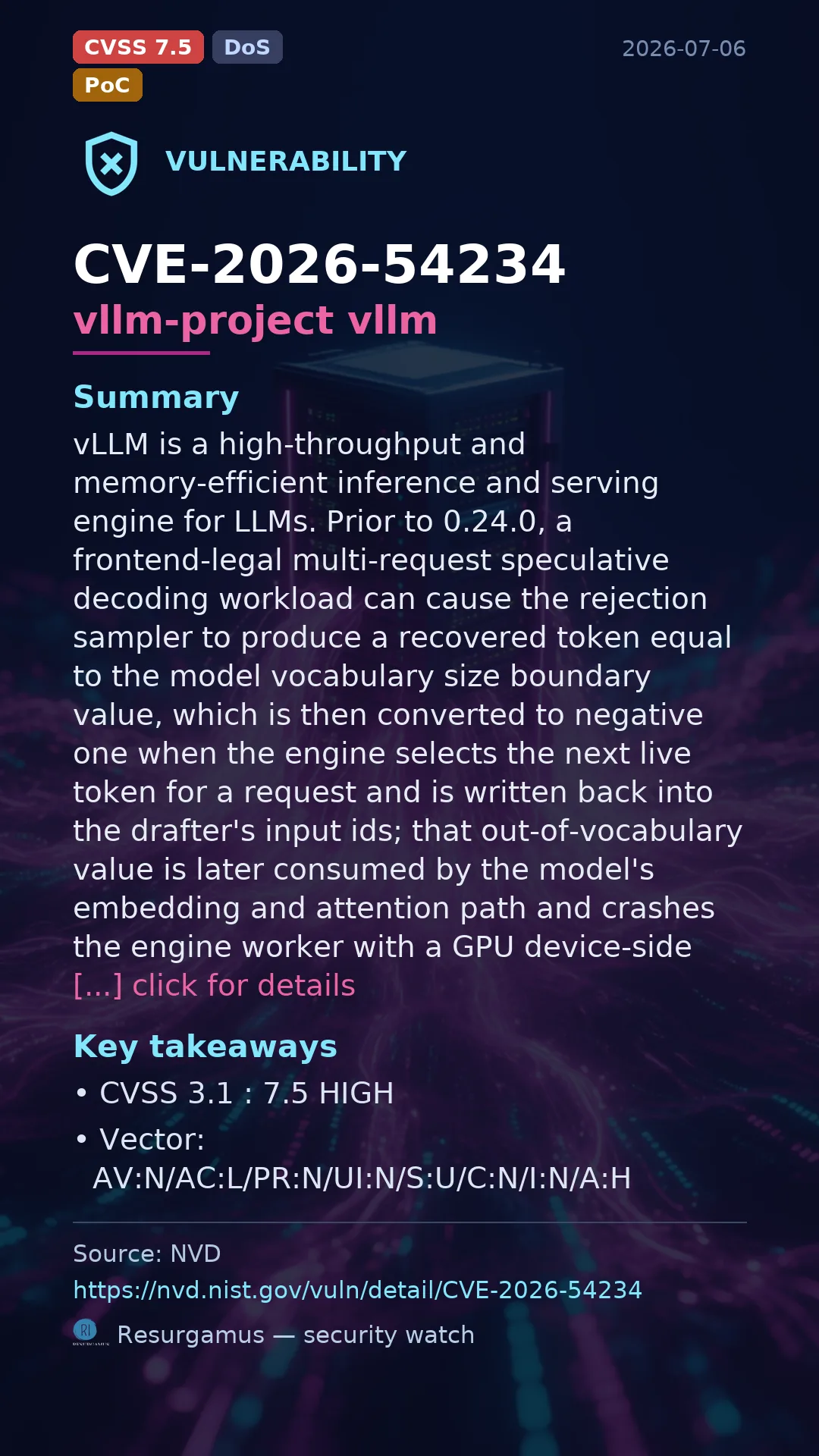
vLLM is a high-throughput and memory-efficient inference and serving engine for LLMs. Prior to 0.24.0, a frontend-legal multi-request speculative decoding workload can cause the rejection sampler to produce a recovered token equal to the model vocabulary size boundary value, which is then converted to negative one when the engine selects the next live token for a request and is written back into the drafter's input ids; that out-of-vocabulary value is later consumed by the model's embedding and attention path and crashes the engine worker with a GPU device-side assertion. The same triggering request sequence is reachable through the public gRPC Generate and Abort endpoints, so a remote client that can send generation requests can crash the shared engine worker, aborting concurrent requests and causing a service-wide denial of service for other clients of the deployment until the worker is restarted. This issue is fixed in version 0.24.0.
A public proof-of-concept or exploit code is available, raising the risk of active exploitation. No distribution fix is listed yet; apply vendor mitigations and monitor.
Recommended action: Track your distribution's security tracker and apply the fix as soon as it ships.
Severity metrics
CVSS 3.1 : 7.5 HIGH
Vector: AV:N/AC:L/PR:N/UI:N/S:U/C:N/I:N/A:H
Affected & fixed versions by distribution
Versions are the native distribution strings (backport-aware): RHEL/Debian/SUSE backport fixes, so compare with the distro version comparator (dpkg / rpm / vercmp), not the upstream version.
No affected package in the tracked watchlist yet (Debian, Ubuntu, Arch, SUSE, Red Hat...). Triage may still be pending.